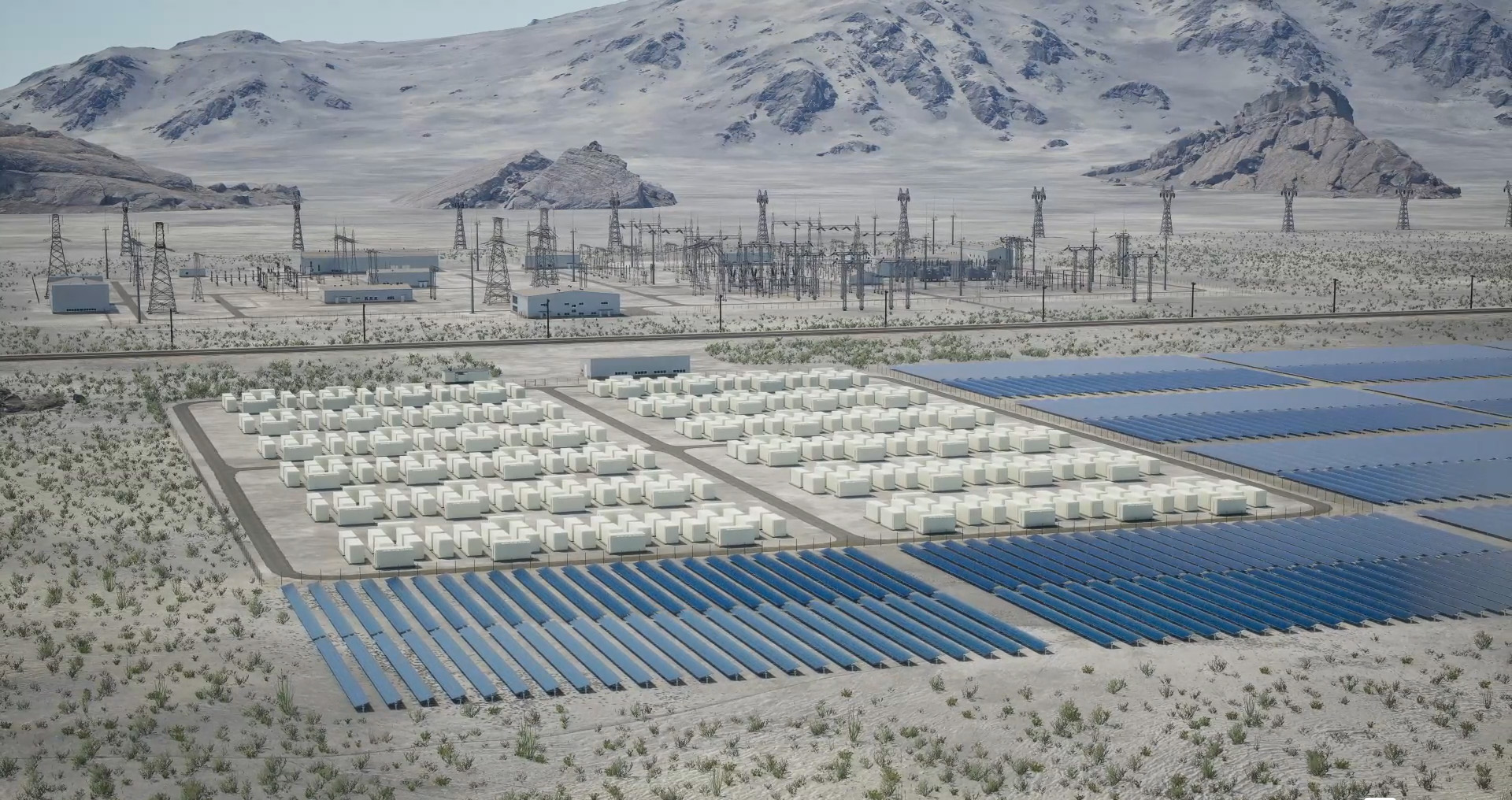
One size doesn’t fit most: BESS sizing for successful and reliable energy storage projects
Expert insights for addressing technical requirements that determine sizing of Battery Energy Storage Systems (BESS)
Battery Energy Storage Systems (BESS) are incredibly versatile systems that are essential for achieving a balance between supply and demand of electricity on the grid. BESS allows operators to store and dispatch electricity as needed, delivering consistent and dependable power supply. By enabling the efficient use of renewable energy sources, BESS projects play a pivotal role in reducing greenhouse gas emissions, thereby supporting global efforts to meet the growing need for energy.
BESS projects must be sized accurately to meet capacity and discharge requirements. Their sizing must consider many constraints including capacity, power factor, degradation, round trip efficiency, and frequency of operation. Adding to the mix the fact that electrical equipment, such as batteries and inverters, are large and have strict layout requirements. Fitting enough capacity into a project’s physical boundaries can become a challenge. Carefully tailoring a system around these constraints is vital for long-term success.
Energy Storage Project Success Depends on Accurate BESS Sizing
Accuracy in sizing is essential to a project’s efficiency, reliability, and cost-effectiveness. Efficient sizing ensures that a system can meet current and future energy demands. Properly sized BESS contribute to reliability by supporting grid stability (also called grid forming) and reducing the risk of power outages. Precise BESS sizing can minimize both initial capital expenditures and long-term operational costs, optimizing ROI and making energy storage projects more financially viable.
The factors that impact BESS sizing are complex and interconnected, ranging from the developer’s project requirements, such as operation time frames and financial return expectations, to technical constraints like load variability and the fluctuating energy demands of the grid. These come into play as soon as a project location is selected and the initial designs have begun. Interconnection Applications (IAs) and site assessments are time consuming processes for project developers and if a BESS designer does not understand how maximum PCS power can influence BESS sizing, IAs and site assessments can inadvertently create unwanted design constraints. Not all agreements are the same: the country is made up of different regional markets (RTOs and ISOs) each with unique requirements. To further complicate the BESS project sizing process, the site location, weather, and terrain all influence how BESS and power conversion system (PCS) equipment – such as inverters - operate, which significantly changes how a system is sized.
Finally, equipment pairing must be considered: an optimal combination of batteries and inverters needs to be determined for a project to return the most value to the owner. Batteries and inverters have differing energy/power ratings and are not always aligned well for a given project. The project’s integration and sizing team must work through many options to find the best available pairing within the constraints of their Interconnection Agreement and site conditions. To be successful, team members must have deep expertise in the latest product technical characteristics.
Factors to Consider for Accurate BESS Sizing
BESS sizing is also uniquely difficult because its performance is constantly subject to capacity degradation and system losses. Some battery capacity is lost due to calendar degradation, which occurs naturally from the time a battery is manufactured until the system operation begins. The duration and temperature during storage of batteries can significantly impact the severity of the calendar degradation. Throughout the project term, battery systems are subject to cycle life degradation, which is the capacity lost during year over year operation. The speed of this degradation varies based on the duration and frequency of each charge and discharge cycle. Capacity will be further reduced by equipment inefficiencies, cabling, and parasitic auxiliary losses.
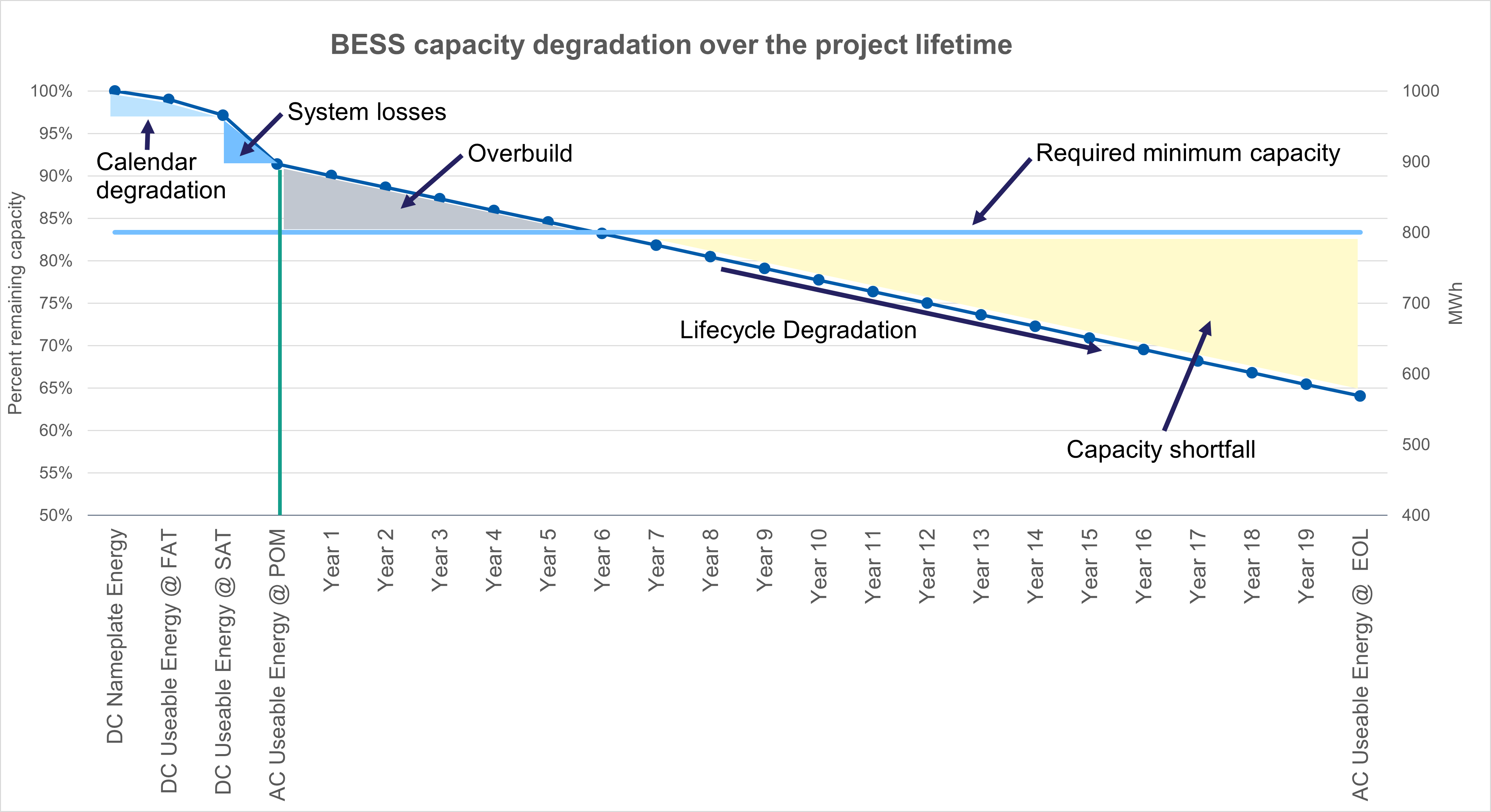
These potential capacity losses must be anticipated and accounted for in BESS sizing because projects have either PPA or merchant capacity numbers to meet. Site conditions also need to be considered, since ambient temperature and elevation impact how effectively a system can operate. Extremely high or low temperatures and high elevations result in equipment de-rates that reduce system capability and require additional overbuild during initial design and deployment.
To add further complexity to project sizing, battery technology is changing rapidly, and manufacturers are introducing new products every 2-3 years. The battery product that a developer had in mind at the time they submitted an Interconnection Application may not be available or the best option by the time procurement begins. Staying aware of these product developments is essential because new battery models may have higher energy density, lower degradation, or better efficiency, all of which will improve the BESS sizing.
Advanced Technology Solutions for Selecting Top-Tier Batteries
With the rapidly evolving energy storage product landscape, supply chain expertise is crucial in BESS design and sizing. It ensures the timely availability and quality of components, reducing project delays and optimizing system performance. When integration teams have access to an extensive supply chain network, they can build out databases of vendor product data. Access to current and future product specifications allows design and engineering teams to efficiently size projects for the initial build and for the entire project life through augmentation. System owners will be focused on the BESS sizing for the entirety of the project life to minimize their total cost of ownership and maximize revenue. Integrators should always keep augmentation in mind when doing initial BESS sizing to reduce complications and unnecessary costs down the road. The inclusion of augmentation batteries or allocated space also allows for system flexibility and scalability, addressing capacity degradation over time and adapting to evolving energy demands.
By incorporating initial and augmentation sizing the BESS design process is directly linked to a project’s long term financial success. Proprietary software designed by energy storage integrators can incorporate years of battery energy storage system design and operation, incorporating engineering knowledge and field performance data to make better design decisions. With this software, engineering teams can run recursive design configurations to determine the most cost-effective solution.
Although the challenges of accurately sizing a BESS encompass complex technical, environmental, and market-specific considerations, mastering these obstacles is paramount to ensuring the success of energy storage projects. A well-sized BESS enhances grid stability and reduces the risk of power outages. It also optimizes both initial and long-term project costs, promoting the financial viability of the project and consequently, the transition to clean energy generation.